EDGAR, as EDGAR should be.
Every SEC filing, complete and unaltered, in a clean format that’s easier to read and faster to work through. Tables show what changed from last year, charts follow along with the text, and new disclosure is highlighted as you read.
 As filed on EDGARIn EdgarReader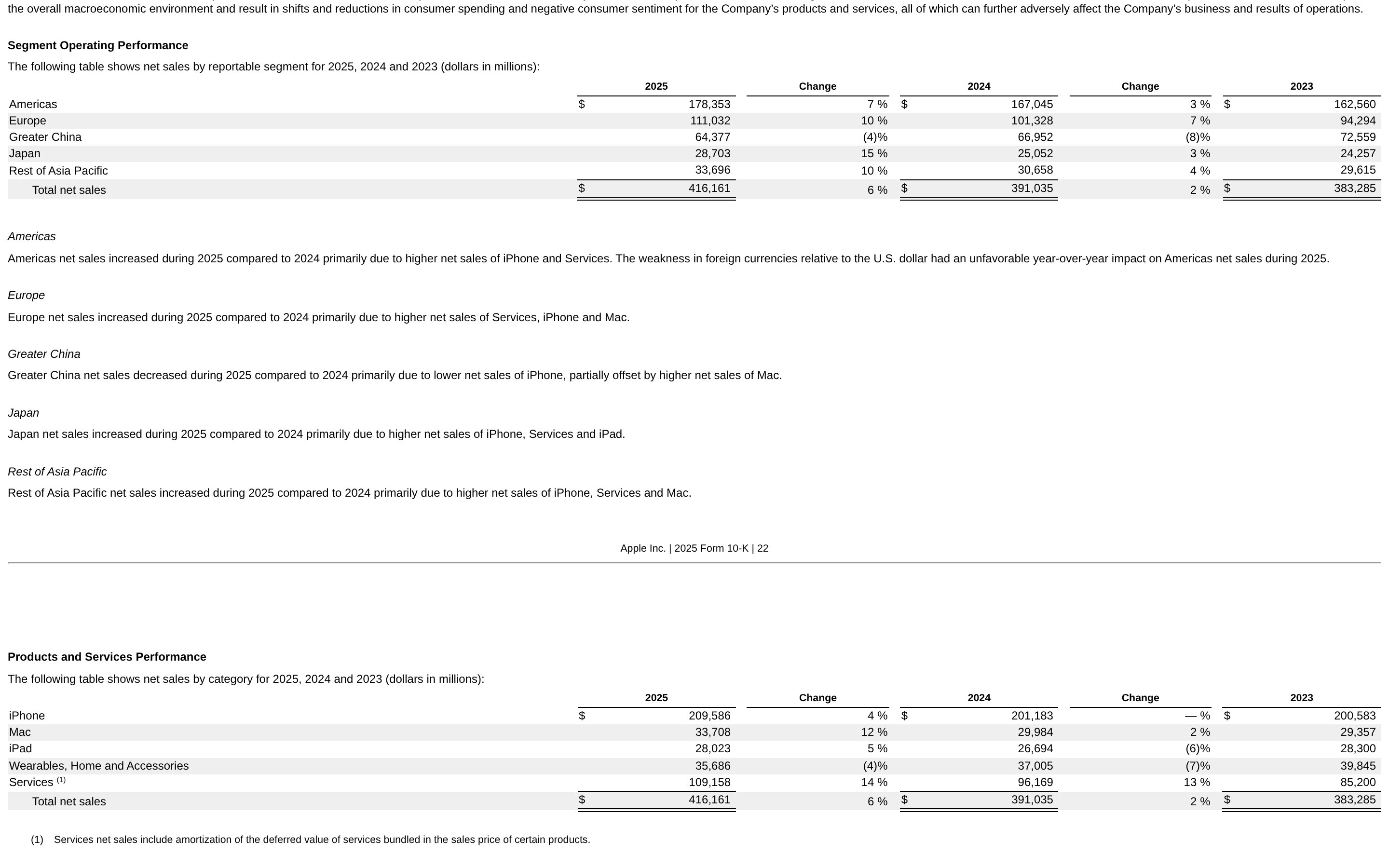
Left, the filing as EDGAR serves it. Right, the same page in EdgarReader. Drag to compare.
Financial tables with the work already done
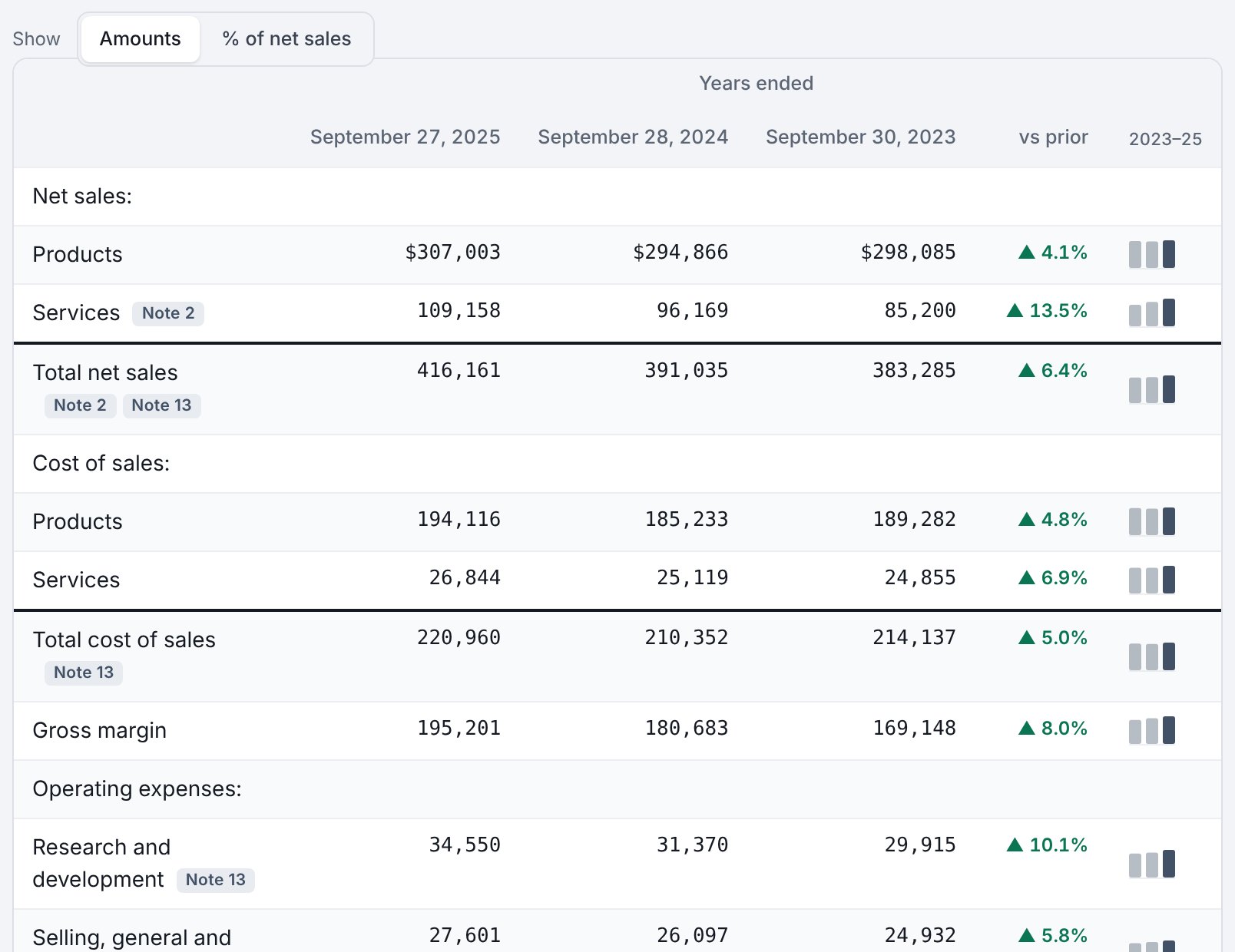
Every statement and note table comes with the year-over-year change, colored so increases and declines stand out, and a trend line on each row. One click turns the income statement into a common-size view, margins included.
The numbers behind the MD&A, right beside itPro
Management’s discussion talks about the numbers, but the numbers sit pages away in the tables and notes. EdgarReader charts the relevant segment and line-item data beside the text, and the chart changes as you read from one topic to the next.
Words like “increased” and “decreased” are colored and linked to the figures they describe. Click one for both years and the table it came from. A word is only linked when the sentence and the table agree.
Risk factors that tell you somethingPro
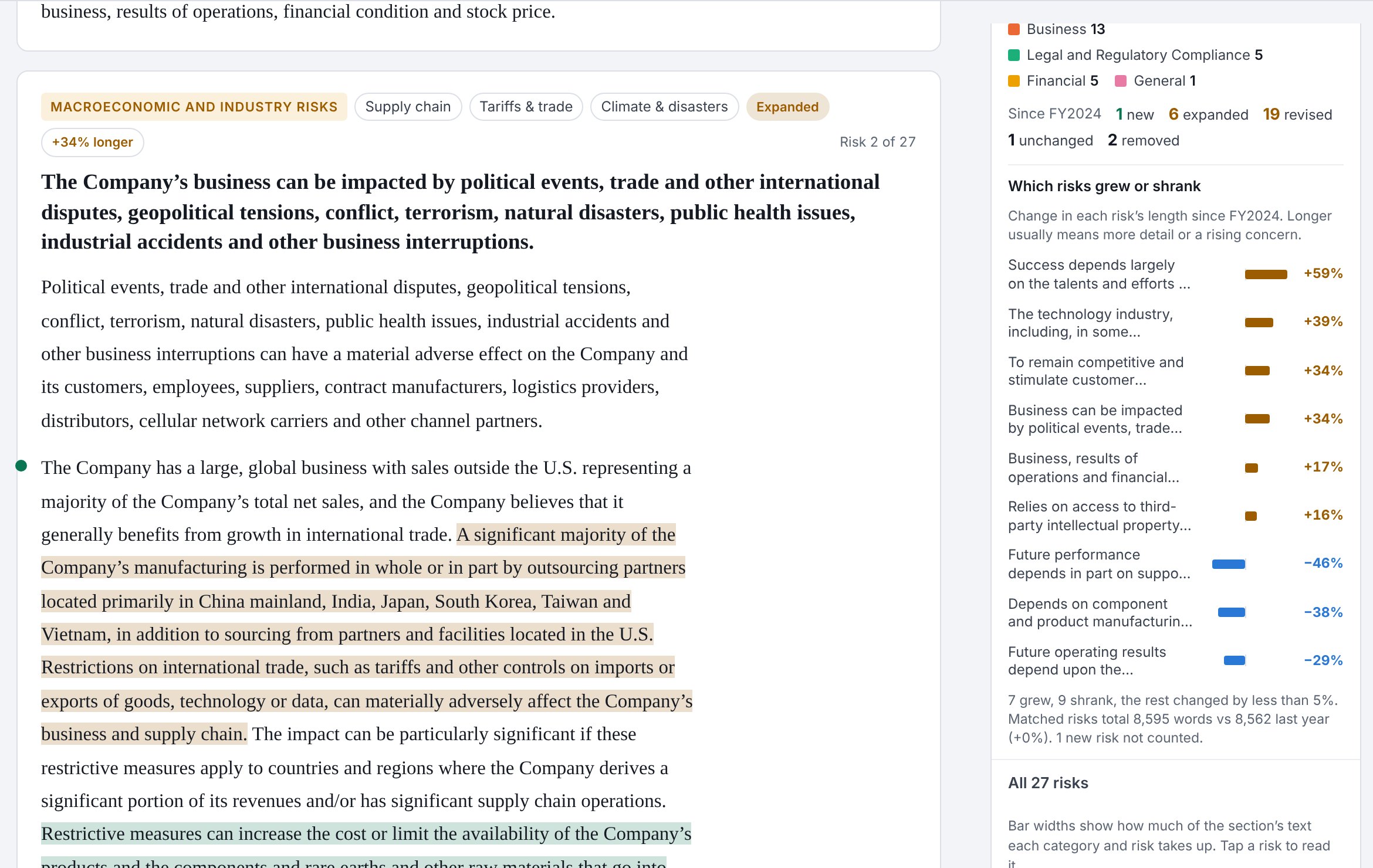
Risk factors rarely get deleted. They get longer. EdgarReader flags each one as new, revised or expanded, measures how much it grew or shrank, and ranks them.
You see where management’s language has shifted, often well before it shows up in the numbers.
Last year’s filing, redlinedPro
Most of a 10-K is carried over from last year. What matters is what changed. EdgarReader compares every 10-K, 10-Q, 20-F and proxy with the prior filing and marks new and revised language, with last year’s wording a click away.
Deletions are listed too, because what a company stops saying matters as much as what it adds. Switch to changes-only and everything that carried over folds away.
Legal proceedings as a timelinePro
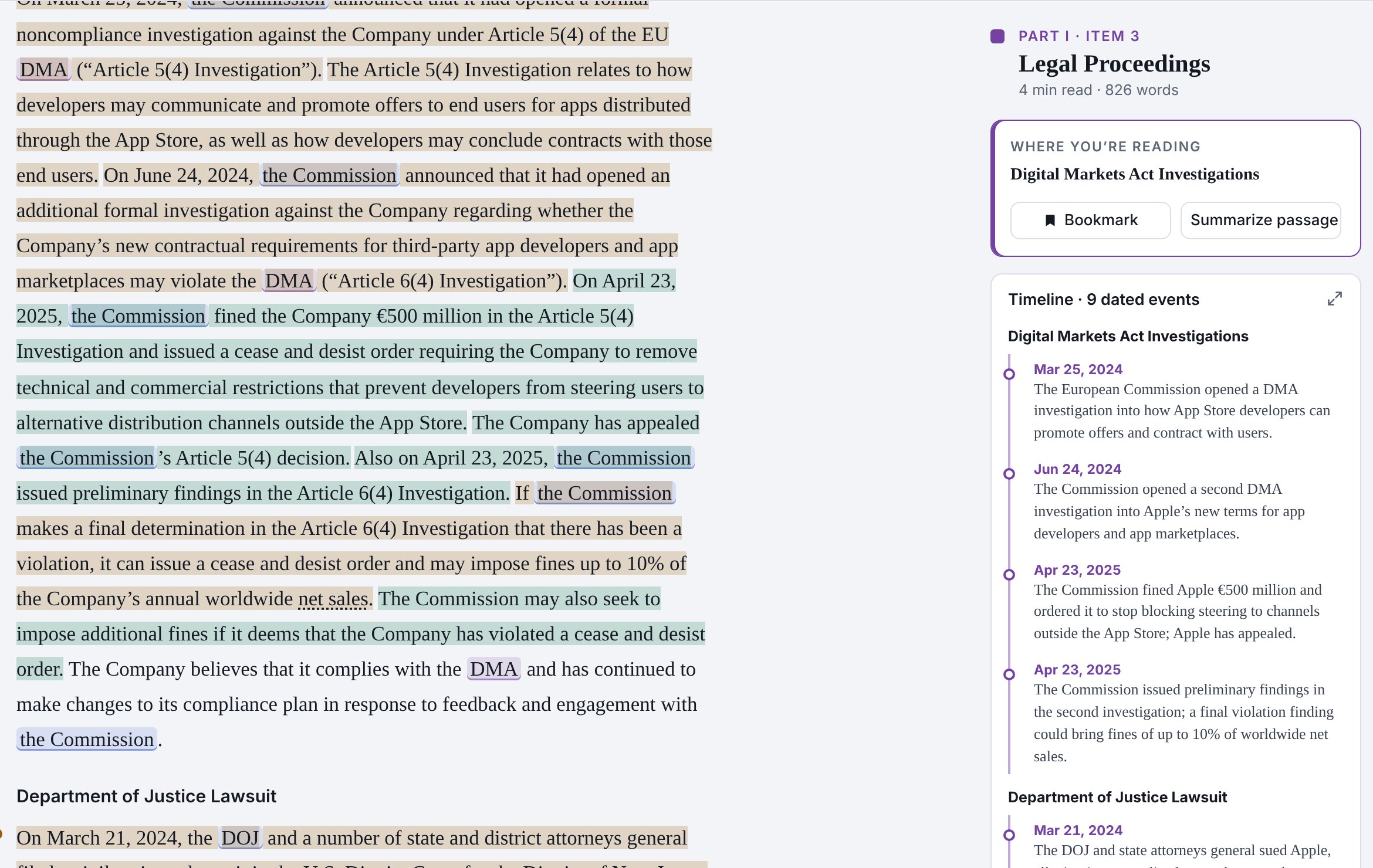
Lawsuits, regulatory actions, rulings and appeals are pulled out of the legal section and put in date order, with a line on each. Click a date to read the full disclosure.
Footnotes, linked both ways
Every statement line that cites a note links straight to it. Click Note 3 next to net income and you land on the line in the note that explains it.
Each note also lists the statements that reference it, so you can go from the detail back to the income statement, balance sheet or cash flows without losing your place.
Every number has a source
Click any figure for its period, the prior-period value and the XBRL tag it was filed under.
Pro calculates key ratios, including margins, free cash flow, DSO, leverage and returns. Each one opens to its formula, filled in with the filing’s own numbers, and every input links to its line in the statements.
Pricing
Reading is free, for every filing. Pro is $39 a month and adds the redlines, the MD&A charts, risk factor and litigation analysis, and calculated ratios. Try it free for 7 days.
Free
- Every filing on EDGAR, complete
- Year-over-year change and common-size view on every table
- Increases and decreases linked to the numbers
- Footnotes linked to and from the statements
- Source, period and prior-year value for any figure
- Section navigation, search and bookmarks
Pro
- Everything in Free
- Redline against the prior filing
- Changes-only reading mode
- Segment and line-item charts beside the MD&A
- Risk factor and litigation analysis
- Calculated ratios with the formulas shown
- Chart and compare any line item
- AI summaries of any section or passage
The trial needs a card. Cancel any time before day 7 and you won’t be charged. Prices in US dollars.
Questions
Do you summarize or cut anything?
No. You get the entire filing as it was submitted. Everything we add sits in the margin.
Where do the numbers come from?
Directly from the filing: its tables and the XBRL data filed with the SEC. Anything we calculate is labeled, and every input links back to its line.
How does the trial work?
Seven days of Pro, free. You’ll need a card, and you can cancel from your account page any time before the trial ends.
Is this investment advice?
No. EdgarReader is a research tool. What you do with the filing is up to you.